
Latest News: FuturEnergy signs contract with WF Recycle-Tech to deliver 1.5T/hr commercial tyre pyrolysis plant
Biochar CleanTech Accelerator - Sustainability Innovator Of The Year ‘Highly Commended’ winners at Innovation Awards 2025
Latest News: FuturEnergy signs contract with WF Recycle-Tech to deliver 1.5T/hr commercial tyre pyrolysis plant Biochar CleanTech Accelerator - Sustainability Innovator Of The Year ‘Highly Commended’ winners at Innovation Awards 2025
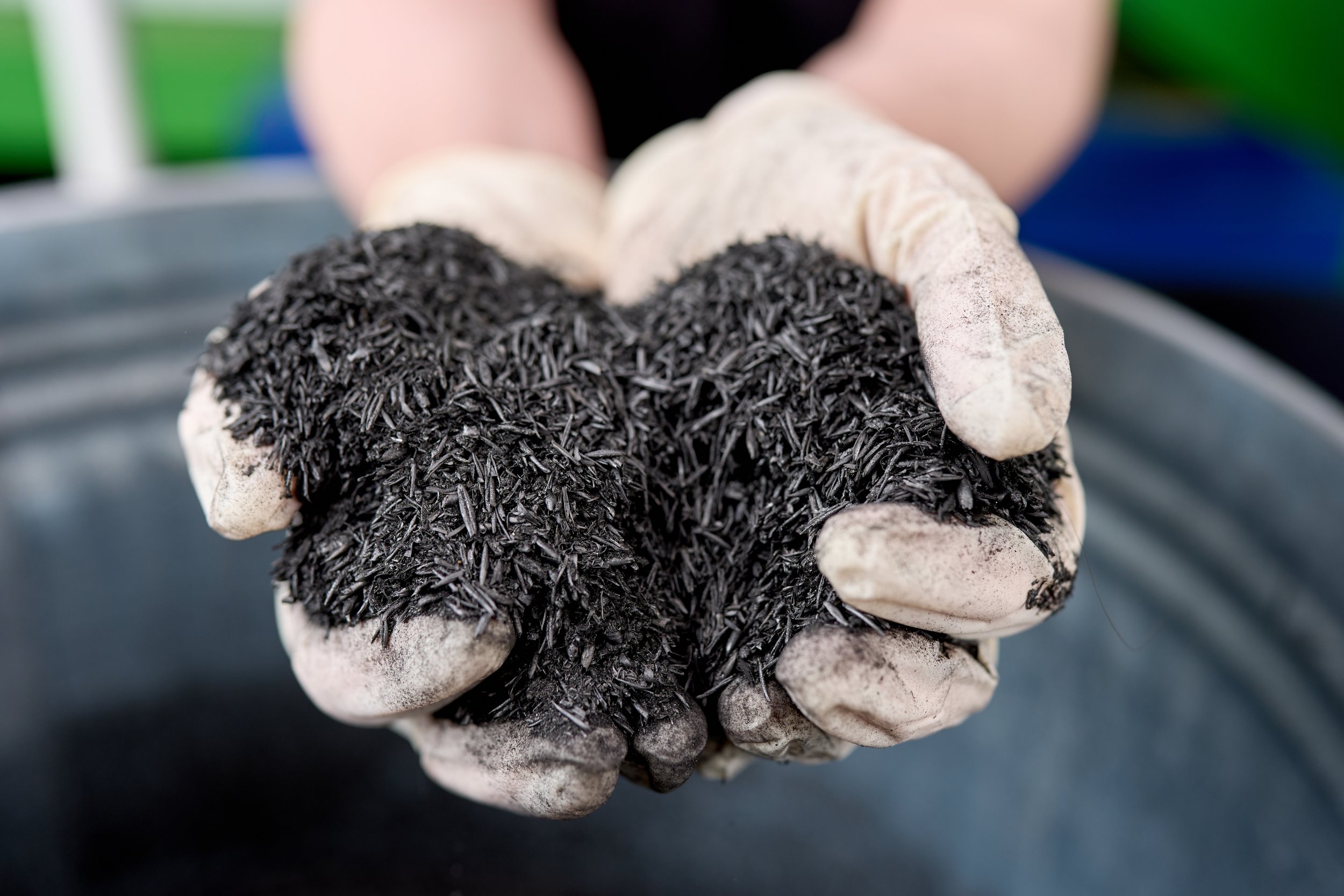
Biochar and the circular economy
The circular economy seeks to minimise waste, retain the value of materials, and reduce reliance on finite resources by keeping products and materials in use for as long as possible. Within this framework, biochar is increasingly recognised as a practical tool for upgrading biomass residues into long-lived, value-adding products.
Rather than treating organic residues as a disposal problem, biochar production enables them to be repurposed as part of integrated, low-carbon systems.
Circular use of biomass residues
By converting agricultural and industrial residues into useful products, biochar production supports a circular approach to resource management. Materials that might otherwise be landfilled, openly burned, or exported for disposal are instead upgraded into value-adding outputs.
Common residue streams suitable for biochar production include:
Agricultural by-products such as husks, straw, and processing residues
Forestry residues and wood waste
Biomass by-products from food and beverage manufacturing
Other organic materials with limited reuse options
Within a circular economy model, these materials are no longer viewed as waste but as feedstocks for producing stable carbon products, energy, and co-products that can be reintegrated into productive use.
Biochar and sustainable systems
Biochar is not a single solution to environmental challenges, but it can play an important role within integrated sustainability strategies. Its effectiveness depends on several interrelated factors:
Feedstock sourcing and availability – Ensuring residues are sustainably sourced and do not compete with food or other essential uses.
Production technology and operating conditions – Pyrolysis temperature, residence time, and system design all influence biochar properties and performance.
Intended end use and application – Agricultural, construction, and industrial applications each require different biochar characteristics.
Local regulatory and market frameworks – Environmental permitting, product standards, and offtake markets shape how biochar can be deployed.
Because these factors vary by location and application, biochar projects are most effective when designed as part of a broader system rather than as standalone interventions.
Closing material loops through biochar
Biochar contributes to circularity by closing material loops at multiple points:
Carbon retention – Carbon contained within biomass is stabilised in solid form rather than released back to the atmosphere through decomposition or combustion.
Nutrient cycling – When used in soils or growing media, biochar can help retain nutrients and reduce losses, supporting more efficient nutrient use.
Material substitution – In construction and industrial applications, biochar can partially replace more carbon-intensive materials, reducing overall environmental impact.
These characteristics allow biochar to function as both a material product and a carbon management tool within circular systems.
Integration with energy and industrial processes
One of the strengths of biochar production within a circular economy is its ability to integrate with existing industrial and agricultural processes.
During pyrolysis, energy-rich vapours and gases are generated alongside the solid biochar. In integrated systems, this energy can be:
Recovered for on-site heat or power
Used to offset fossil fuel consumption
Incorporated into wider energy management strategies
This co-production of materials and energy improves overall system efficiency and supports more resilient, self-contained operations.
Key takeaways
Biochar supports the circular economy by converting biomass residues into long-lived, value-adding products rather than treating them as waste.
Pyrolysis enables carbon contained in biomass to be stabilised in solid form while also allowing recovery of useful energy.
Biochar can contribute to circular systems across agriculture, construction, and industry by improving resource efficiency and reducing reliance on carbon-intensive materials.
The effectiveness of biochar depends on feedstock sourcing, production technology, intended use, and local regulatory frameworks.
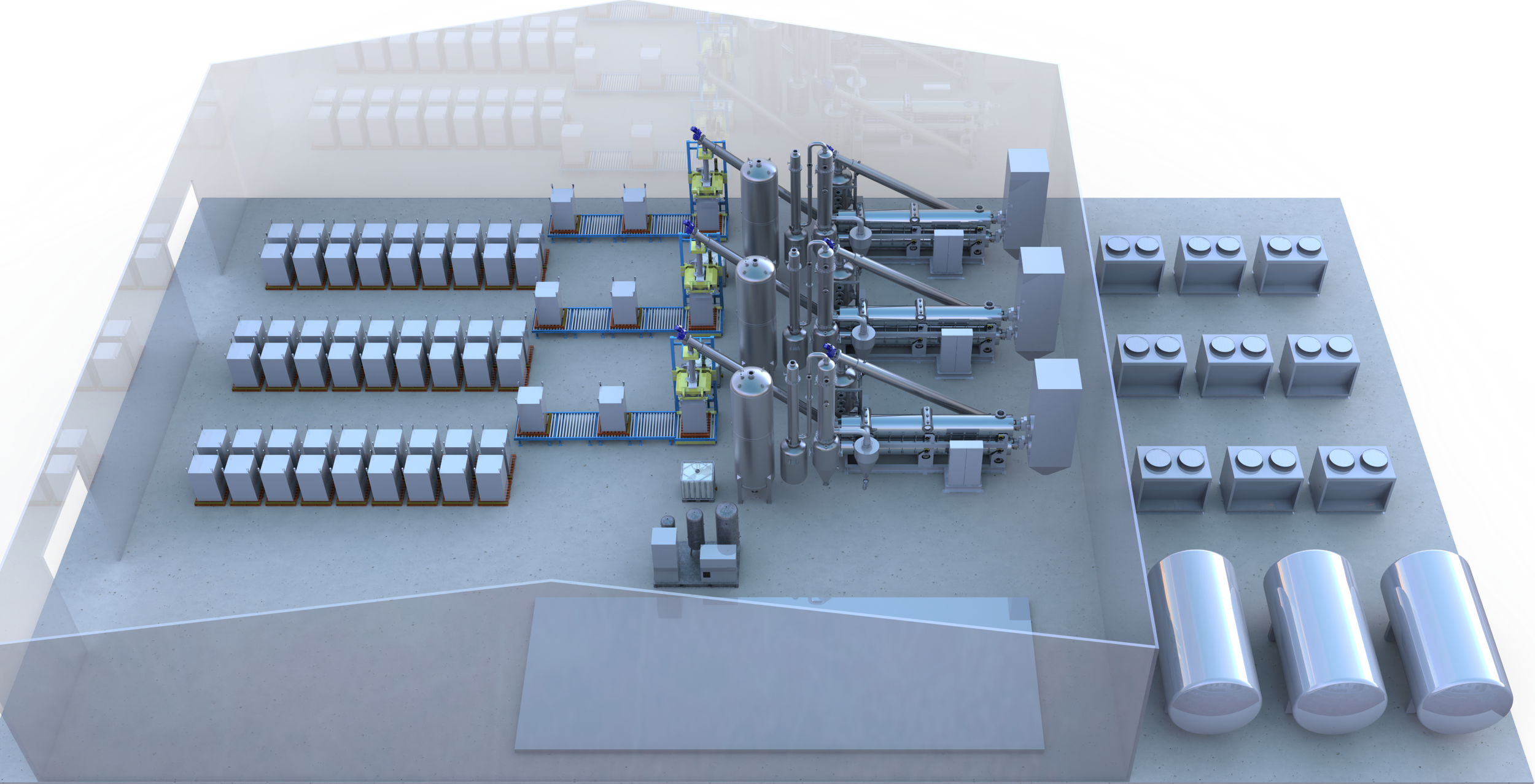
Industrial-scale biochar systems play an important role in delivering consistent quality, traceability, and measurable environmental performance.
Industrial-scale biochar in a circular economy
As interest in biochar grows, industrial-scale systems are increasingly being developed to ensure consistent quality, traceability, and environmental performance.
Larger, engineered systems enable:
Reliable and repeatable biochar properties
Measurable environmental outcomes
Integration with industrial residue streams
Compliance with emerging standards and frameworks
These characteristics are important for embedding biochar within formal circular economy strategies, particularly where long-term performance and accountability are required.
Biochar as part of a broader transition
Biochar does not replace the need for waste reduction, material efficiency, or emissions avoidance. Instead, it complements these efforts by providing a pathway for residues that cannot be eliminated or reused directly.
Within the circular economy, biochar is best understood as one component of a wider transition toward more efficient, regenerative, and low-carbon systems — turning unavoidable residues into long-term value rather than short-term waste.
Learn more
Through advanced pyrolysis technology, FuturEnergy contributes to the deployment of circular carbon systems that transform biomass residues into stable, value-adding biochar products.